One of the defining differences between a standard work van and a motorhome or campervan is the number of devices. Cookers, showers, TVs, refrigerators, heating and cooling are all what make a van suitable for habitation.
And they all need to be powered somehow.
That’s where a leisure battery comes in. It helps provide the power devices and appliances need to deliver the quality of life we look for.
So what is a leisure battery? What are the different types of leisure battery and what do you need to look for?
We’ll answer all these questions and more right here.
What is a leisure battery?
A leisure battery provides low current for prolonged periods of time to help power devices in motorhomes, campervans and caravans.
It’s an addition to your standard van battery and works differently.
Your standard van battery is designed to provide a surge of electrical current to start the engine.
It’s great for short periods of time and will then need recharging by the engine via the alternator.
A leisure battery is purely for the habitation area of a camper or motorhome. It’s usually a larger battery (deep cycle) designed to provide lower currents for longer periods.
This battery will power your refrigerator, shower, cooker, heating, cooling, TVs and any other appliance or device you use.
You can charge a leisure battery from the engine but you can also charge it from pitch power or solar panels.
What are the different types of leisure battery?
There are a few types of leisure battery and each has its pros and cons.
Open lead-acid battery
Open lead-acid batteries are similar to van batteries in that they have lead plates surrounded by sulphuric acid (flooded). A chemical reaction between the lead and the acid produces current, powering devices.
Open lead-acid batteries are heavy and require maintenance to keep topped up with distilled water. They also require a vent of some kind as they emit gas.
They are among the cheapest types of leisure battery though.
Open lead-acid batteries are ideal for occasional use or weekend camping but not prolonged use as you cannot drain it below 50% charge without damage.
Sealed lead-acid batteries
Sealed lead-acid batteries work in a similar way to open batteries but won’t need so much maintenance or topping up.
They are also heavy and emit gas when charging so will need a vent and cannot be discharged below 50% without damaging them.
Sealed lead-acid batteries are more expensive than open batteries but can be used more often and aren’t restricted to occasional use.
AGM (absorbed glass mat) leisure batteries
AGM (absorbed glass mat) leisure batteries are like lead acid in that they have the lead and the acid. They differ in that the acid is contained within a fibreglass mat.
The mat helps maintain pressure and manage vibration. AGM batteries are also leakproof and can be mounted on their side, offering more storage options.
AGM leisure batteries can be discharged below 50%, which adds to their utility. The downsides are that they are more expensive and typically have a shorter operating life than lead acid.
Motorhome Workshop stock a range of AGM leisure batteries including:
Gel leisure batteries
Gel leisure batteries use lead and acid like other batteries but contain the acid within a gel-like paste.
The advantage here is that gel leisure batteries are leakproof and can cope with a wider range of temperatures. That makes them ideal for travelling to different climates.
The other advantage is that you can discharge gel batteries up to 80% to get more out of them per cycle.
They are more expensive though and prefer slower discharge and recharge rates.
Lead crystal leisure batteries
Lead crystal leisure batteries are like AGM as they use lead and acid mats. They differ in the composition of the mat and the acid.
Lead crystal leisure batteries require little to no maintenance, won’t leak and can be discharged way past the 50% of AGM. That makes them ideal for prolonged or frequent use. They also have a much longer operating life.
The downside is that they are more expensive, up to twice the cost of AGM.
Lithium (LiFePO4) leisure batteries
Lithium (LiFePO4) leisure batteries use the tried and tested lithium construction we see everywhere, in phones, laptops, electric cars and other devices.
Lithium leisure batteries are lighter, easier to use, have double the energy density of lead acid batteries and can cope with frequent charging and discharging.
Perfect for a motorhome, caravan or campervan.
They can also last up to 10 times longer than lead acid and be discharged more than 80%.
The downside is cost. They can cost a lot more than any other type of battery, especially while demand for lithium is high.
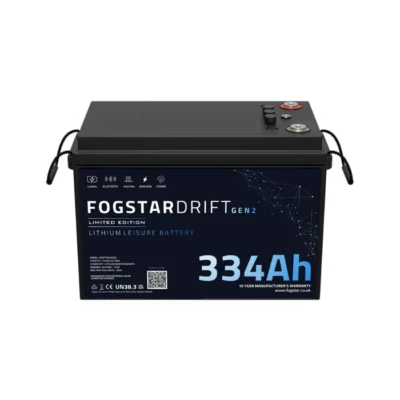
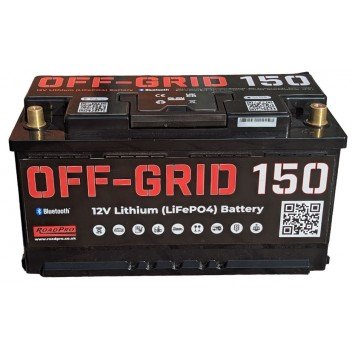
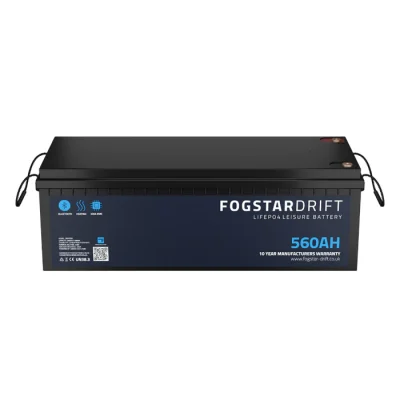
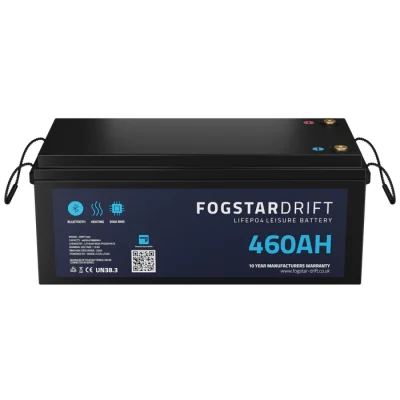
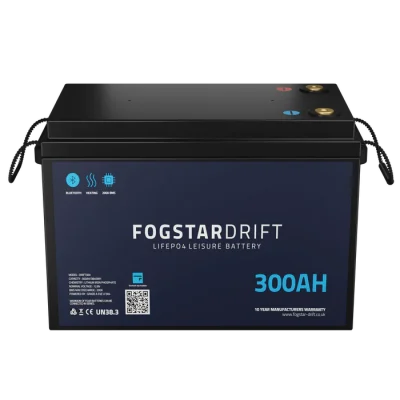
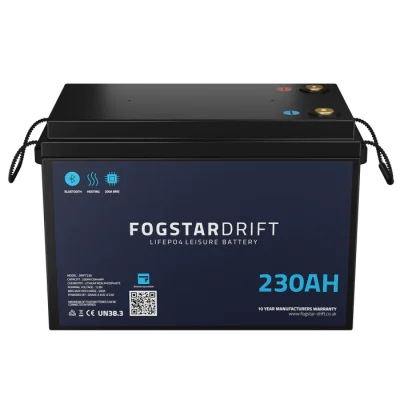
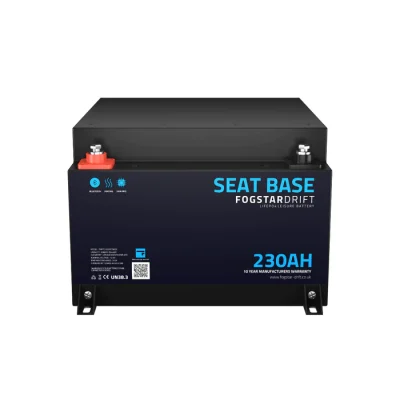
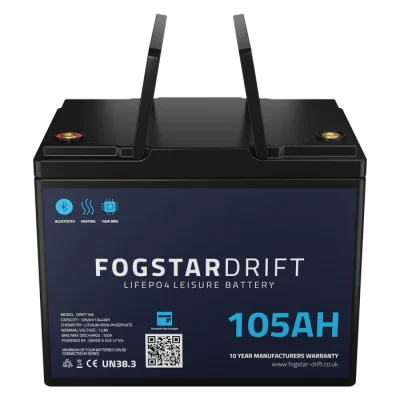
Motorhome Workshop stock a range of lithium leisure batteries including:
What do the different categories of leisure batteries mean?
Now you have an idea of the different types of battery, you’ll need to know a little about their categories.
There are 3 categories, A, B and C. They are controlled by the Leisure Battery Verification Scheme run by the National Caravan Council and can help you decide which battery is best for your needs.
Category A – Higher storage capacity ideal for vehicles that remain off-grid or away from pitch power for longer periods.
Category B – Medium capacity battery for vehicles that will sometimes use pitch power and have modest energy demands.
Category C – Low capacity battery for vehicles that will most often use pitch power or won’t need to power so many devices.
What type of leisure battery do you need?
Now you have an understanding of leisure batteries, you probably already have an idea of what type you want to use.
If you don’t, here are some considerations to make. If in doubt, one of the Motorhome Workshop team is always here to help.
Occasional use
If you’re planning to use your motorhome, campervan or caravan on occasional weekends on a pitch, a dual-purpose leisure battery like flooded lead acid would work well.
Regular use
If you plan to travel more often and may not always have access to pitch power, a 110Ah+ semi-traction battery like AGM, gel, lead crystal or lithium would be more suitable. They can all provide power for longer periods and cope with deeper discharge.
Capacity
Battery capacity is measured in Ah, ampere-hours. The higher the capacity, the longer a battery can provide power for.
To calculate capacity, you’ll need to calculate the Ah the devices you need to power at the same time. There are online calculators that can help with that.
Energy capacity
Energy capacity is how many Watt-hours, Wh, the battery can provide. Where capacity is about Ah over time, Wh is about total energy requirements.
Again, there are calculators that can help with that or you can ask one of our team.
Battery voltage
Battery voltage will typically be 12v, but there are some 24v systems. We tend to recommend 12v deep cycle leisure batteries as they can provide steady power over time.
Some larger systems will use 24v, so check what your vehicle uses if you’re planning an upgrade.
Cycle life
Cycle life refers to how many times you can charge and discharge your leisure battery. Higher is better but will usually cost more.
High quality batteries will have a practical minimum of 360 cycles. That’s 360 charges and discharges. Lithium and some lead crystal batteries can far exceed that number, for a price.
Depth of discharge
Depth of discharge refers to how far you can drain a leisure battery before it needs recharging.
You’ll notice above, lead acid can be discharged to 50% where lithium batteries can exceed 80% discharge.
Leisure batteries for vehicles
There are other considerations like battery dimensions, charge rate, lifespan, weight and price but we think these are all primary considerations when shopping for a leisure battery.
There’s a lot to consider and much will depend on your vehicle and how you use it, which is why we cannot make specific recommendations here.
If you need help or advice, contact one of the Motorhome Workshop team. We’re here to help.