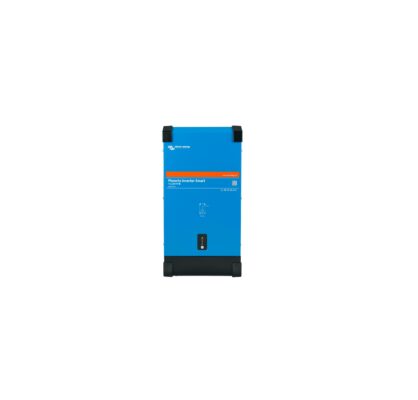
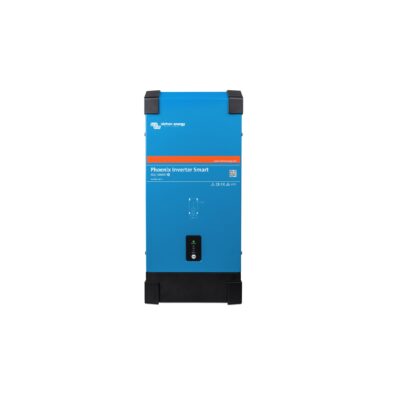
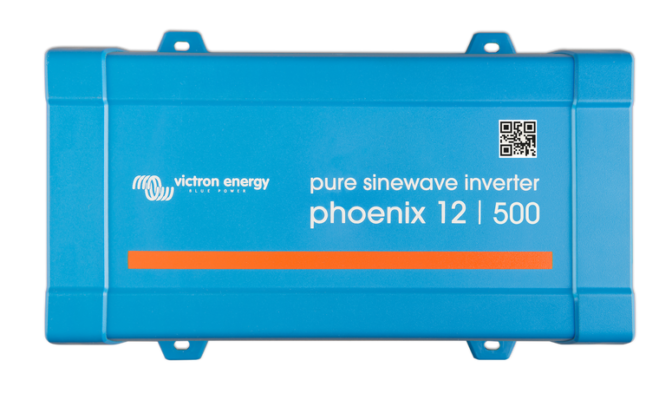
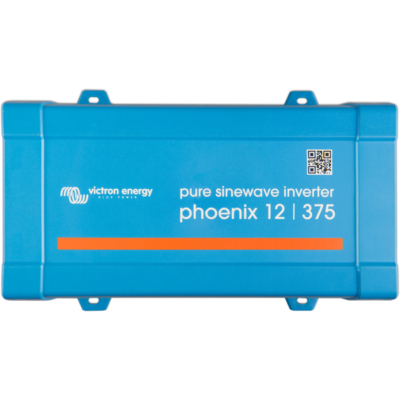
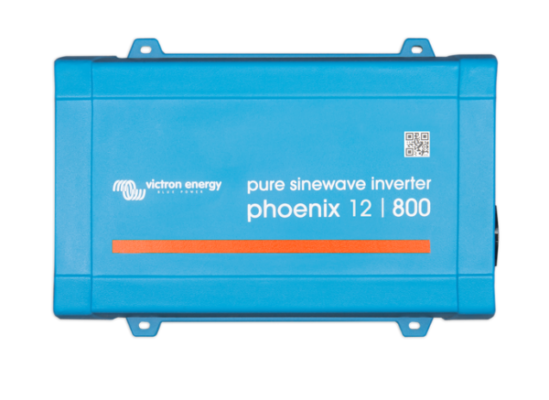
If you want to live your best van or motorhome life, producing your own energy and using appliances within your vehicle has to be top of your to-do list. There’s nothing wrong with building a day van or keeping it simple. But if you want a true home from home, you’re going to want to use electricity in some form. For that, you’ll need an inverter for your motorhome or camper. Our expert team is trained and experienced in everything from off-grid solar to full electrical installations. That makes us the logical place to turn to if you want information about camper conversions or electrical upgrades. Today we’re talking almost exclusively about motorhome inverters.

What is an inverter?

Motorhome and camper inverters convert DC current from a battery or solar panel into AC current that can be used by appliances. It’s a modest device that has a vital job to play and your van or motorhome won’t be able to use appliances without it. The inverter sits between your energy source, typically a leisure battery or solar panel and the device you’re trying to power. While many vehicle electronics can use DC, many appliances and retrofit devices require AC power. It’s the job of the inverter to ’invert’ stored or generated DC current to AC so it can be used. You can buy motorhome-specific appliances that use DC power but these don’t always deliver the same experience as standard three-point plug devices and appliances. Using an inverter gives you the freedom to use whatever you want in your van.

How do inverters work?

Motorhome inverters work by taking DC current from a feed and passing it through a transformer. That transformer switches DC on and off to create alternating current (AC). It then feeds it to the output and on to whatever you’re powering. 12v motorhome inverters are tuned to take current from stored energy and output to around 230v 240v which will be acceptable to most appliances and electronics. There are two types of camper inverters, modified sine wave and pure sine wave. Modified sine wave inverters mimic energy from utilities by reproducing a steady rhythmic pattern. It doesn’t duplicate exactly the same wave as utilities but does a decent job of copying it. Pure sine wave inverters produce identical waveforms to utilities and can be used for a wider range of uses. Our range of 12v Victron inverters are the highest quality sin wave inverters and come with a worldwide 5 year warranty as standard. They use better electronics to deliver a wave much closer to that of utility companies. Modified sine wave inverters are cheaper but are not as exact as pure sine wave inverters. They can also cause minor interference and overheating in some situations. Pure sine wave inverters are more expensive but more suitable for delicate electronics and can cope better with different loads. If you’re powering basic appliances that can cope with less exact energy, a modified sine wave inverter can work. If you’re planning to power electronics or sensitive devices, we recommend a pure sine wave inverter. They are more expensive but are much kinder to your equipment.

What inverter wattage do you need for a camper or motorhome?

What inverter wattage you need for a camper or motorhome depends on how much you need. You’ll find camper and motorhome inverters come with a variety of wattages, 500W, 1200W, 3000W and so on. We recommend working out how much you’ll need and rounding up so you have slightly more capacity. You never know when you might add another appliance or device! To work out what size inverter you need, calculate how many appliances or devices it will need to power and their individual wattage requirements. Also factor in how you would use those devices. For example, if you’re planning to use a laptop charger (60W), a kettle (2000W) and a vent (80W), your peak individual use would be 2000W for the kettle. However, if you think you might use all those devices at the same time, you’ll need 2140W (60W + 2000W + 80W). As our closest inverters are 2000W or 3000W, we would recommend the 12v 3000w Victron Phoenix Inverter for this situation. This would enable you to use all the devices at once while also providing overhead for anything else you might add to your camper or motorhome. Make sure to read the peak, or maximum power requirement for each appliance. Some labels only offer averages, so make sure you know the difference! You could also use camper versions of all appliances to lower your energy requirements. That’s completely your call though. We provided this example purely as a guide. Camper-specific appliances typically have much lower loads. If you need help with any of this calculation, contact Motorhome Workshop. Our team will be more than happy to help.

Can your leisure battery deliver that kind of power?

Camper inverters are just part of a larger system. To be able to deliver sufficient power to your camper or motorhome, it needs a battery or power source with enough energy to run the devices you require. For this we recommend using a high-quality AGM battery. When you’re pitched and connected to mains, this becomes a moot point. If you don’t always use pitches or like to roam free, you’ll need a leisure battery with enough juice to power everything. As you can imagine, the size of the leisure battery you use depends entirely on the requirements of your vehicle. Camper conversion needs a unique combination of high level overview and a finer, detailed view. You need an overall idea of energy use and demands but also a more exact view of every specific component. This is another area where the expert team at Motorhome Workshop can help.

Installing a camper inverter

Motorhome Workshop can install your camper inverter as part of the price. But, if you want to know how we do it, it’s a relatively straightforward process. An inverter should ideally be placed as close to the battery as possible. This reduces inefficiency and shortens the cable run. We would install the inverter with an inline fuse to keep everything safe and place a switch somewhere you can easily turn the system on and off. The battery or power source is connected to the inverter input and the output is connected to the van feed. From there it can be distributed throughout your camper or motorhome’s electric system. It’s important to use the correct cabling with the correct rating. It’s also important to use the right connectors and provide airflow to prevent overheating or moisture buildup. Otherwise, installation requirements are modest and inverters are usually small enough to fit into even the smallest spaces.

Motorhome inverters

As you can see, the subject of motorhome inverters is both simple and complex at the same time. As long as you do your research, check the peak power requirement for all appliances and the peak power demands of how you would use those appliances, you should be fine. If in doubt, contact Motorhome Workshop. Our expert team can help you specify an inverter or an entire electrical system for a van conversion. We can even carry out the install for you as part of the experience!
£986.00 supplied and fitted, includes VAT

Fitting time is approximately 5 hours.

£1,278.00 supplied and fitted, includes VAT

Fitting time is approximately 5 hours.

£717.00 supplied and fitted, includes VAT

Fitting time is approximately 3 hours.

£1,515.00 supplied and fitted, includes VAT

Fitting time is approximately 4 hours.

£1,306.00 supplied and fitted, includes VAT

Fitting time is approximately 4 hours.

£455.00 supplied and fitted, includes VAT

Fitting time is approximately 2 hours.

£421.00 supplied and fitted, includes VAT

Fitting time is approximately 2 hours.

£664.00 supplied and fitted, includes VAT

Fitting time is approximately 3 hours.